MECHANISM // CENTRAL PATHWAY
How PT-141 Works: Melanocortin Receptor Agonism
PT-141 is a melanocortin receptor agonist that acts in the brain's desire circuitry — not on blood vessels. Here is the pathway, in plain words.
The short version
PT-141 is a melanocortin receptor agonist. "Agonist" means a molecule that fits a receptor (a docking site on a cell) and switches it on, the way a key turns a lock [1]. The receptors here are called melanocortin receptors — specifically MC4R and MC3R — and they sit mostly inside the brain, not in the blood vessels [1].
When PT-141 turns on MC4R in the hypothalamus (a small control center deep in the brain), it engages circuits that govern sexual desire and arousal [5]. That is the whole point: it works on the wanting, the brain side of sex, rather than on plumbing. The common erection pills do the opposite — they relax blood vessels in the body so blood can flow [9]. Because PT-141 acts in the brain, its effects and its side effects (like nausea and flushing) also trace back to the brain and to other places these receptors appear [7].
What a melanocortin receptor agonist is
Melanocortin receptors are a family of five docking sites (MC1R through MC5R) that respond to natural "melanocortin" signaling molecules — chiefly alpha-MSH, which the body cleaves from a larger precursor protein [1]. PT-141 is a synthetic stand-in for alpha-MSH: a stable ring of seven amino acids built to switch these receptors on [11].
Two of the five subtypes matter most here. MC4R is the main brain target tied to sexual desire and, separately, to appetite [5]. MC3R is a secondary central pathway [1]. A third, MC1R, sits in the skin — which is why repeated frequent dosing can darken skin and gums, a melanocortin effect rather than a sexual one [7]. Understanding the receptor map explains why one molecule produces such different effects in different tissues.
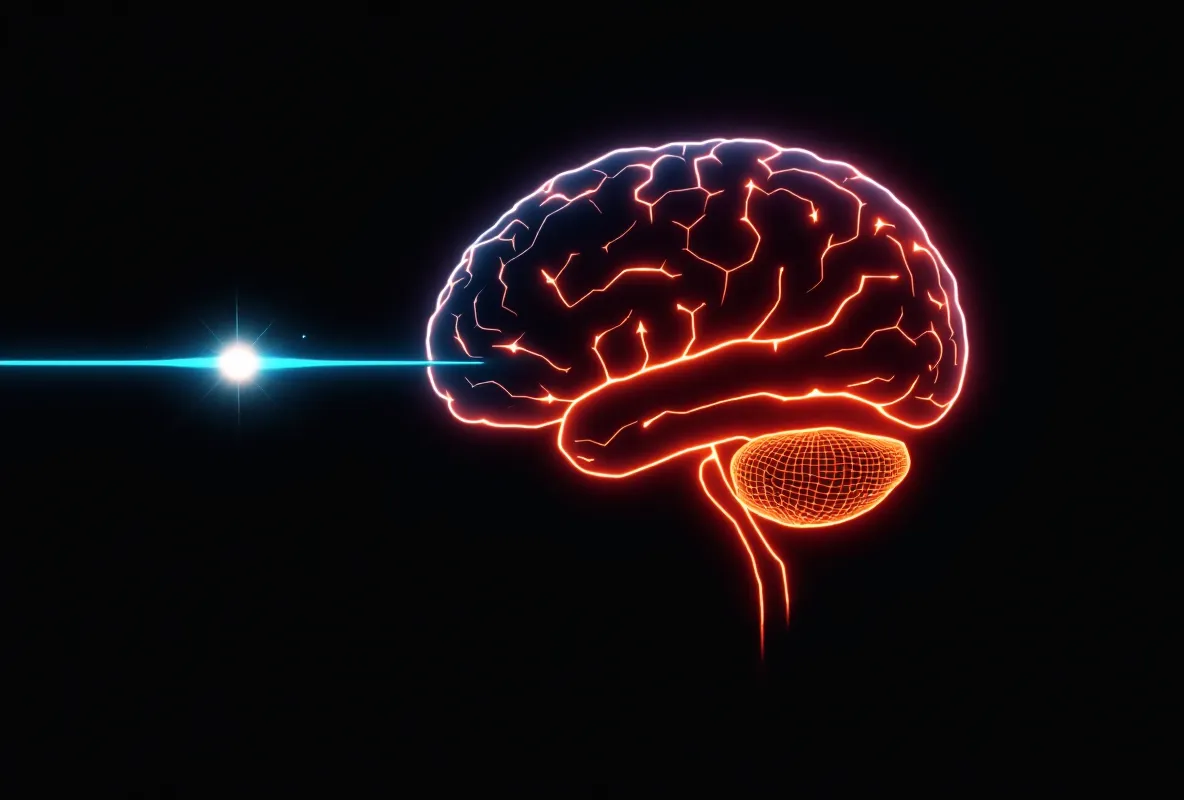
Central, not vascular: how PT-141 differs from PDE-5 inhibitors
This is the single most important distinction. PDE-5 inhibitors (a class that includes sildenafil) work peripherally — they act on vascular smooth muscle to improve blood flow into erectile tissue [9]. They do nothing for desire; they help the physical response once arousal is present.
PT-141 works the other way around. It acts centrally, in the brain's neural circuitry of sexual motivation [1]. In animal models, systemic PT-141 activated hypothalamic neurons and produced erections through a central route, not a vascular one [1]. In women, a placebo-controlled fMRI study showed MC4R activation enhanced amygdala-insula connectivity and altered how the brain processed erotic stimuli — direct evidence of a central mechanism [5]. The two drug classes are not interchangeable; they address different links in the chain.
The dopamine connection — and its limits
Stimulating MC4R in hypothalamic regions such as the medial preoptic area is thought to engage dopaminergic signaling — the brain chemistry of appetitive, desire-driven behavior [1]. In female rats, PT-141 selectively increased "solicitational" behaviors (proceptive, desire-driven actions) without changing reflexive responses or general movement, making it the first reported agent acting on appetitive female sexual behavior [2].
The picture is not unconditional. In female Syrian hamsters, neither low- nor high-dose bremelanotide changed melanocortin-receptor gene expression in the mesolimbic dopamine system, and the drug did not enhance sexual reward in a place-preference test — suggesting it does not act on the classic VTA-to-nucleus-accumbens reward circuit [6]. The mechanism is central and desire-oriented, but it is not simply "more dopamine."
What is PT-141 peptide, at the molecular level
PT-141 (bremelanotide) is a cyclic heptapeptide with the sequence Ac-Nle-cyclo[Asp-His-D-Phe-Arg-Trp-Lys]-OH and a molecular weight near 1,025 Da [1]. The lactam bridge that closes the ring gives it more stability than a straight-chain peptide [7]. It is structurally related to melanotan II but with the C-terminal amide replaced by a carboxylic acid [11]. This is the molecule behind every finding on this site; the PT-141 research page connects the structure to what it did in each study.